Sex and Music
On rhythm, memory, and how the right soundtrack can open a door to deeper intimacy.
Read articleThoughts on sex, relationships, fear, dating, and the gentle work of change.
On rhythm, memory, and how the right soundtrack can open a door to deeper intimacy.
Read articleOn movement, confidence, and how reclaiming your own aliveness can bring fresh energy to a partnership.
Read articleOn imagination, the reality of the mind, and how the worlds we picture inside ourselves quietly shape the lives we live.
Read articleOn the quiet power of emotional safety—and how it opens the door to deeper physical connection.
Read articleOn intimacy in a fast, filtered world—and why real connection still begins with honesty.
Read articleOn navigating sexual compatibility, honest boundaries, and the vulnerability that actually builds intimacy.
Read articleWhy some people freeze at the idea of intimacy—and how to gently rewire the patterns keeping love at a distance.
Read articleReflections on sex, relationships, fear, and becoming more awake.
Read articleOn rhythm, memory, and how the right soundtrack can open a door to deeper intimacy.
5 min readThere is a reason a single song can transport us backward in time, straight into the body we once were.
Music has a strange power over intimacy. It moves through the mind quickly, bypassing language and logic, and lands somewhere deeper — in the chest, the hips, the breath, the memory. A song can make a person feel sexy before they have said a word. It can make a room feel safer. It can make a touch feel like it means something.
In my work, I often invite people to notice what happens in their bodies when music enters the room. Some people soften immediately. Others tense up. Some remember a lover, a loss, a version of themselves they have not visited in years. The response is rarely neutral. Music is emotional architecture. It builds the world we are about to step into.
One of the most beautiful things about music is that it gives us a shared rhythm without requiring explanation. Two people can be unsure of each other, uncertain where to begin, and then a song starts and something shifts. Bodies begin to synchronize. Eye contact becomes easier. The awkwardness of “what do we do now?” dissolves into the simpler question of “how does this feel?”
Rhythm is a language older than words. It tells us when to move and when to wait. When to lean in and when to pull back. When a moment is building and when it has arrived. In intimacy, that kind of guidance can be a relief. Especially for people who spend too much time in their heads, music offers a way back into the body.
“Music does not ask us to perform. It invites us to participate. And participation, not perfection, is where intimacy begins.”
We do not experience music in a vacuum. Every song arrives with associations. The track that played during a first kiss. The album that got you through a breakup. The playlist that made you feel desirable again after a long season of doubt. Music is woven into our intimate histories, sometimes in ways we do not fully realize until a certain chord hits and the body remembers.
This is worth paying attention to, because a song that opens one person may close another. A track that feels freeing to one partner might carry grief or shame for someone else. Part of creating intimacy is becoming curious about these differences. What does this song remind you of? What does your body say when it plays? Is this soundtrack helping us land in the present, or is it pulling us somewhere else?
When two people can talk about this honestly — even imperfectly — the music becomes more than background noise. It becomes a point of connection.
There is a vulnerability in letting music move you. It means dropping the performance of being cool, unaffected, in control. It means letting your body respond to something outside yourself. For people who have learned to guard their emotions carefully, this can feel risky at first.
But that is exactly why music can be so healing in intimacy. It gives us permission to feel. A slow song can hold sadness and sensuality at the same time. An upbeat track can invite play without requiring anything serious. A familiar melody can make a new partner feel less like a stranger. Music creates emotional permission slips that words sometimes cannot.
“The right song does not create desire. It reveals the desire that was already there, waiting for a doorway in.”
I am not suggesting that music is a magic fix for intimacy. A playlist cannot replace honesty, safety, or communication. But it can shape the atmosphere. It can slow things down. It can cover the silence while two people find their way toward each other. It can remind a person that their body is allowed to feel pleasure.
If you want to use music more intentionally in your intimate life, start by noticing. What kind of music helps you feel present? What helps you feel soft, powerful, playful, or open? What does your partner respond to? Is there a genre, an artist, a tempo that brings you both into the same room?
Sometimes the most intimate thing you can do is not choose the sexiest song. It is choose a song that makes both of you feel like yourselves.
Sex and music are both about being moved. And when we let ourselves be moved — by rhythm, by memory, by another person — we often find our way back to parts of ourselves we had forgotten were there.
On movement, confidence, and how reclaiming your own aliveness can bring fresh energy to a partnership.
5 min readThere is a particular kind of magic that happens when a person stops performing intimacy and starts feeling at home in their own body again.
When I first started exploring pole dancing, I was not thinking about relationships. I was thinking about myself — about whether I could still feel strong, graceful, and unapologetically embodied after years of living mostly in my head. What I did not expect was how much that single shift would ripple outward into every other part of my life, including my closest connections.
Because here is the truth I keep coming back to: desire in a long-term relationship rarely dies from a lack of technique. More often, it dims because we stop feeling like ourselves. We get busy. We get tired. We start moving through our days as partners, parents, professionals, and caretakers — and somewhere along the way, the part of us that feels sensual, playful, and alive gets tucked away for later. But later keeps not coming.
Pole dancing, for me, was less about the pole and more about the remembering. Remembering that my body could do things I had forgotten. Remembering that strength and softness could live in the same person. Remembering that I was allowed to take up space, to move slowly, to feel pleasure in my own skin without needing anyone else's permission.
That kind of reclamation is powerful. When you feel more alive in your own body, you bring a different energy into the room. Not because you are trying to be attractive, but because you are no longer trying to disappear. There is a confidence that comes from that — a quiet, grounded self-assurance that is far more magnetic than any scripted seduction.
“The sexiest thing a person can bring to a relationship is not a move they learned. It is the feeling that they actually want to be there, in their body, with you.”
One of the things I love most about pole dancing is that it invites play. It is not about being perfect. It is about being present. The first time I tried it, I was clumsy. I laughed. I fell a little. I got back up. And something about that willingness to be awkward and still keep going reminded me of what intimacy actually needs: curiosity, humility, and a sense of humor.
Relationships get stale when everything becomes transactional. We ask each other about schedules and logistics and who is picking up what, but we forget to play. We forget that intimacy can be light, experimental, and a little ridiculous.
I think a lot of people worry that trying something like pole dancing will feel forced or awkward in a relationship. They imagine they need to perform for their partner, to be someone they are not. But in my experience, the thing that lands most deeply is not the performance. It is the aliveness.
Your partner is not looking for perfection. They are looking for you. The version of you that is engaged with life, that is willing to try something new, that is not waiting for permission to feel good. When you reconnect with that part of yourself, the dynamic between you shifts. There is more eye contact. More teasing. More ease. More of the spark that originally drew you together.
Of course, pole dancing is not the only path back to yourself. For some people it might be dancing in the kitchen, yoga, martial arts, swimming, hiking, or simply turning on music and moving alone in the living room. The form matters far less than the return. The question is not what looks sexy. The question is: what helps you feel like yourself again?
If pole dancing interests you, try a class. Try it for yourself first, not for anyone else. Let it be about your strength, your rhythm, your body. Let it be a place where you are not a role — partner, parent, professional — but simply a person in motion.
“Spicing up a relationship rarely starts in the bedroom. It starts with one person deciding they are worth reclaiming.”
I want to be clear that no activity, including pole dancing, is a fix for deeper relationship wounds. If there is resentment, betrayal, emotional neglect, or a long history of mismatched desire, a class will not solve it. Those issues deserve honest conversation, and sometimes the support of a coach or therapist.
But if the spark has simply gone quiet under the weight of ordinary life, movement can be a beautiful way to wake it back up. Not by becoming someone new for your partner, but by remembering that you are still interesting to yourself.
So can pole dancing spice up your relationship? It can — but mostly because it gives you a reason to fall back in love with your own body first. And that is a kind of energy no relationship can resist.
On imagination, the reality of the mind, and how the worlds we picture inside ourselves quietly shape the lives we live.
5 min readAlbert Einstein once said that imagination is more important than knowledge. It is a line people often quote, but I think it is worth sitting with for longer than a moment.
Knowledge is what we already know. It is the map we have been handed, the rules we have memorized, the stories we have inherited about who we are and what is possible. Imagination, on the other hand, is the territory we have not yet entered. It is the mind's way of rehearsing a future that does not exist yet, of trying on a self we have not yet become.
Einstein understood something that we are still learning: the mind does not simply observe reality. It participates in creating it. The images we hold, the narratives we repeat, the futures we can and cannot picture for ourselves — these are not idle daydreams. They are the architecture of our experience.
In my work, I see this every day. A person comes in believing they are not capable of intimacy, not worthy of love, not able to change. That belief is not a fact. It is an image. It is a story their imagination has been repeating for years, sometimes so quietly they mistake it for truth.
But here is what is remarkable: the same imagination that built the prison can also build the door. When we begin to picture something different — a calmer body, a clearer conversation, a more honest yes or no — the nervous system begins to respond. The brain starts to rehearse a new pattern. The future, even in miniature, begins to feel possible.
This is not positive thinking. It is not pretending. It is the disciplined, creative act of allowing the mind to imagine reality differently, and then letting that imagined reality slowly teach the body what safety, desire, confidence, and connection can feel like.
“Logic will get you from A to B. Imagination will take you everywhere.” — Albert Einstein
One of the reasons change is so hard is that our imagination has been trained by repetition. If you have spent years imagining rejection every time you think about dating, your body does not experience dating as a neutral event. It experiences it as a threat. If you have spent years imagining that your voice does not matter in intimacy, you may find yourself silent in moments where you most long to speak.
The good news is that imagination is trainable. Just as an athlete visualizes a performance before giving it, we can learn to visualize ourselves differently. Not as a performance of positivity, but as a real, felt rehearsal of a new way of being.
Hypnosis, visualization, and mindful coaching all touch this same truth: when the inner image shifts, the outer life eventually follows. Not because wishing makes it so, but because a new image makes new behavior feel imaginable for the first time.
If you pause and listen to the quiet pictures running in the background of your mind, what do you find? Do you see yourself growing, softening, becoming more whole? Or do you see yourself stuck, failing, left behind?
Neither image is random. Both were learned. And both can be updated. The work I do with people is not about forcing change from the outside in. It is about helping them discover that they already have the most powerful tool for change available to them: the ability to imagine themselves, and their relationships, differently.
“The true sign of intelligence is not knowledge but imagination.” — Albert Einstein
Einstein was not talking about fantasy as escape. He was talking about imagination as creation. The ability to hold something in the mind before it exists in the world is the beginning of every invention, every work of art, every healed life.
So what would happen if you began to imagine yourself as already whole, already worthy, already capable of the connection you desire? You might be surprised by how quickly the world begins to make room for that version of you.
On the quiet power of emotional safety—and how it opens the door to deeper physical connection.
5 min readI have noticed something in my work that never stops surprising me: the moment a person feels truly safe with their partner, everything begins to shift.
Not because someone learned a new technique. Not because the lighting changed or the schedule cleared. But because something inside relaxed. The body that had been holding its breath finally exhaled. The mind that had been monitoring, performing, or bracing for rejection softened into the present moment.
And from that place, sex becomes something entirely different.
When I talk about safety in relationships, I do not mean a perfectly peaceful partnership where no one ever disagrees. Real safety is not the absence of conflict. It is the presence of trust.
It is the trust that your partner will not use your vulnerability against you. That your body will be received with respect, not evaluated. That your "no" will be heard without punishment, and your "yes" will be welcomed without pressure.
Many of the people I work with have never experienced this kind of safety in intimacy. They have learned to perform desire, manage their partner's reactions, or disappear into their own heads during sex. They are present in body but guarded in spirit. And over time, that guard becomes exhausting.
“The body cannot fully open where the heart does not feel protected. Safety is not a mood. It is the foundation intimacy is built on.”
Unsafe intimacy does not always look dramatic. Sometimes it looks like going along with something because it feels easier than explaining. Sometimes it looks like silence where there should be conversation. Sometimes it looks like a person who is physically close but emotionally absent.
I have heard people describe sex that leaves them feeling more lonely afterward. Others describe a constant low-grade anxiety: Am I doing enough? Am I attractive enough? Am I too much or not enough? Some carry shame about what they want, or confusion about why they no longer want anything at all.
These are not personal failures. They are signs that the nervous system is doing exactly what it is designed to do: protect us when something feels threatening. And for many people, intimacy has become threatening not because of their partner's actions, but because of the absence of genuine emotional safety.
When a person feels safe, their body changes. Muscles soften. Breath deepens. Touch begins to feel like nourishment instead of performance. Desire often returns—not as a frantic urge, but as a slow, warm current.
Communication changes too. A safe partner can say, “I would like to try this,” without fearing rejection. They can say, “I am not ready for that,” without bracing for withdrawal. They can ask, “What feels good to you?” and actually hear the answer.
In safety, curiosity replaces performance. Presence replaces monitoring. Connection replaces isolation.
“The sex people remember is rarely the most technically perfect. It is the sex where they felt seen, accepted, and free to be exactly who they are.”
People sometimes think safety is created in grand gestures or deep conversations. It can be. But more often, it is built in the small, repeated moments between two people.
It is built when a partner listens without interrupting. When they apologize without defensiveness. When they notice a hesitation and slow down instead of pushing forward. When they remember what matters to you and treat it as important.
It is built when you can be ordinary together and still be loved. When your body is not a project to improve but a person to be with.
For some people, safety in intimacy is not something they have ever known. Old wounds, past relationships, religious shame, or family messages about sex can make the body expect harm even when the present partner is gentle.
If that is your story, please hear this: you are not broken. You are responding to what you have learned. And those patterns can be gently unwound, often with support, patience, and a partner willing to meet you where you are.
Sometimes the work begins in the bedroom. More often, it begins in conversation. In honesty. In the slow rebuilding of trust, one truthful moment at a time.
If you want your intimate life to deepen, start by asking a different question. Not “How can we make sex better?” but “How safe do we both feel here?”
Because when safety is present, sex does not need to be forced or fixed. It begins to breathe. It becomes a place where two people can meet without masks, without fear, without the need to earn love through performance.
And that is the kind of intimacy most people are truly longing for.
On intimacy in a fast, filtered world—and why real connection still begins with honesty.
6 min readWe live in a time when intimacy is more visible than ever, and yet, for many people, it feels more confusing too.
In 2026, sex is everywhere and nowhere at once. It is in the algorithm, the headline, the carefully posed photo, the dating app profile, the private message sent at midnight. We have more access to information, more language for identity, more platforms for expression than any generation before us. And still, in my office, I sit with people who feel more alone in their questions than ever.
They come to me wondering why desire has gone quiet in a long-term relationship. Wondering if their preferences are normal. Wondering how to ask for what they want without sounding demanding, or how to say no without wounding someone they love. Wondering if the sex they are having is really theirs, or if it is shaped by expectations they never chose.
These are not new questions. But the world we are asking them in has changed.
One of the things I notice most is how easy it has become to perform intimacy without actually feeling it. We can curate a version of ourselves that looks open, sensual, confident, available. We can say the right words, choose the right images, match the rhythm of a culture that treats sex as both a commodity and a credential.
But performance is exhausting. And underneath it, many people are carrying a quiet anxiety: Am I doing this right? Am I enough? Am I too much? Am I the only one who feels disconnected from something that is supposed to feel natural?
The truth is, sex has never been purely physical. It is emotional, psychological, relational, cultural, and spiritual all at once. When we strip it down to performance, we lose the very thing we are trying to find: connection.
“The most intimate thing we can offer another person is not a body or a technique. It is the truth of who we are, including the parts we are afraid to reveal.”
There is a strange expectation in modern culture that we should arrive fully formed sexually. We should know what we want, how to ask for it, how to please someone else, how to set boundaries, how to be confident, how to be adventurous, how to be chill about it all at the same time.
No one ever tells us that sexual clarity is usually discovered slowly, in relationship, in safety, in failure, in conversation, in solitude. It is not a status we achieve. It is a conversation we keep having with ourselves and, when we are lucky, with someone we trust.
In 2026, I see more people giving themselves permission to be beginners. To say, “I am still learning what I like.” To say, “I changed.” To say, “I thought I wanted one thing, and now I want something else.” That kind of honesty is not a weakness. It is the foundation of authentic intimacy.
We are also, finally, talking more about consent and boundaries. That is a good thing. But I sometimes worry that the conversation has become so focused on rules that we have forgotten how to talk about longing.
Boundaries and desire are not enemies. They are partners in the same dance. A boundary says, “This is where I end.” Desire says, “This is where I want to meet you.” Both require self-awareness. Both require courage. And both become more possible when there is trust.
In my work, I often help people locate the difference between a genuine boundary and a fear-based wall. A genuine boundary protects your integrity. A fear-based wall protects you from ever being known. Learning to tell the difference can change everything.
When I strip away the apps, the advice, the trends, and the noise, most people are asking a version of the same thing: Can I be fully myself with another person and still be loved?
That question lives at the center of sex, relationships, dating, and self-worth. It is not about technique. It is not about frequency. It is about whether we can show up without a mask and be met with curiosity instead of judgment.
In 2026, I believe the most radical thing we can do in our intimate lives is slow down. Turn off the performance. Drop the script. Look at the person in front of us. Ask a real question. Listen to the answer. Let ourselves be seen.
“Real intimacy does not come from having it all figured out. It comes from the willingness to keep showing up, honestly, with yourself and with each other.”
Sex in 2026 is not about being more liberated, more experienced, or more anything than anyone else. It is about becoming more you. More aware of what you want, what you need, what you fear, and what you are capable of giving. It is about learning to hold your own truth with tenderness, and learning to share it with someone who can hold it too.
That is the intimacy I hope for all of us. Not perfect. Not performative. Just real.
Navigating desire, values, and the courage to be honest in love.
5 min readThere is a particular silence that falls between two people when sex becomes something they no longer know how to talk about.
It is not always loud. Sometimes it looks like a pause before answering. Sometimes it looks like changing the subject, or going to bed a little earlier, or pretending that everything is fine because admitting otherwise feels too risky.
I have sat with that silence many times — in my own life, and in the lives of people who come to me confused about why something that once felt connecting now feels like a minefield.
One of the hardest truths I have learned is that two people can love each other deeply and still occupy very different emotional and sexual worlds. One person may want more. One person may want less. One person may be curious about things the other finds uncomfortable. One person may carry shame about a past experience while the other carries assumptions. One person may need emotional safety before desire can show up, while the other needs physical closeness in order to feel emotionally safe.
These differences are not necessarily signs that something is broken. They are often signs that two whole human beings, with their own histories, values, fears, and longings, are trying to find their way to each other.
But differences become painful when they are handled with judgment instead of curiosity.
“There is a world of difference between saying, ‘This is not something I want,’ and saying, ‘What you want is wrong.’ The first is a boundary. The second is a wound.”
I have noticed that people often confuse the two. They think that if they name a limit, they are being judgmental. Or they think that if they express a desire, they are being demanding. Neither is true. Honesty is not cruelty. A boundary is not a verdict.
What makes these conversations so difficult is that sex touches some of our most vulnerable places. It touches our sense of desirability, our self-worth, our history of being accepted or rejected, our beliefs about what we are allowed to want. When a partner says something that lands in one of those tender places, it can feel like evidence of a fundamental flaw — in us, in them, or in the relationship.
But it is rarely that simple.
I have come to believe that one of the most loving things we can offer a partner is the assurance that their honesty will not be used against them. That they can say, “I am curious about this,” without being called deviant. That they can say, “I am not comfortable with that,” without being called prudish or cold. That they can say, “I don't know how I feel,” without being pressured to perform certainty.
These conversations require a kind of courage. They require us to slow down, to drop the need to be right, and to listen for the longing underneath the words. Because often what looks like a fight about sex is actually a fight about safety, belonging, or being chosen.
When someone says, “I want more intimacy,” they may be saying, “I want to feel closer to you.” When someone says, “I need things to slow down,” they may be saying, “I need to trust you more.” When someone says, “I have never told anyone this,” they are offering you something fragile. The response they receive will either open a door or close it for a very long time.
“Compatibility is not about having identical views or matching desires at every stage of life. It is about whether two people can meet each other's honesty with respect.”
There will be moments in every relationship when one person's yes is another person's maybe, and one person's maybe is another person's no. The question is not whether those moments will come. The question is whether you have built enough trust to navigate them together.
And that trust is built, I believe, through vulnerability.
Not the performative kind. Not the vulnerability of confessing everything at once in order to force closeness. The real kind. The kind that says, “I am scared to tell you this, but I am going to try.” The kind that says, “I don't have this figured out, and I need us to figure it out together.” The kind that says, “I love you, and this part is hard.”
Vulnerability is what transforms judgment into understanding. When we let someone see what is actually underneath our position — the fear, the longing, the old story — we stop being opponents and start being two people trying to love each other well.
That is the heart of intimacy. Not perfect agreement. Not flawless performance. But the willingness to be seen, and the grace to let the other person be seen too.
Why some people freeze at the idea of intimacy—and how to gently rewire the patterns keeping love at a distance.
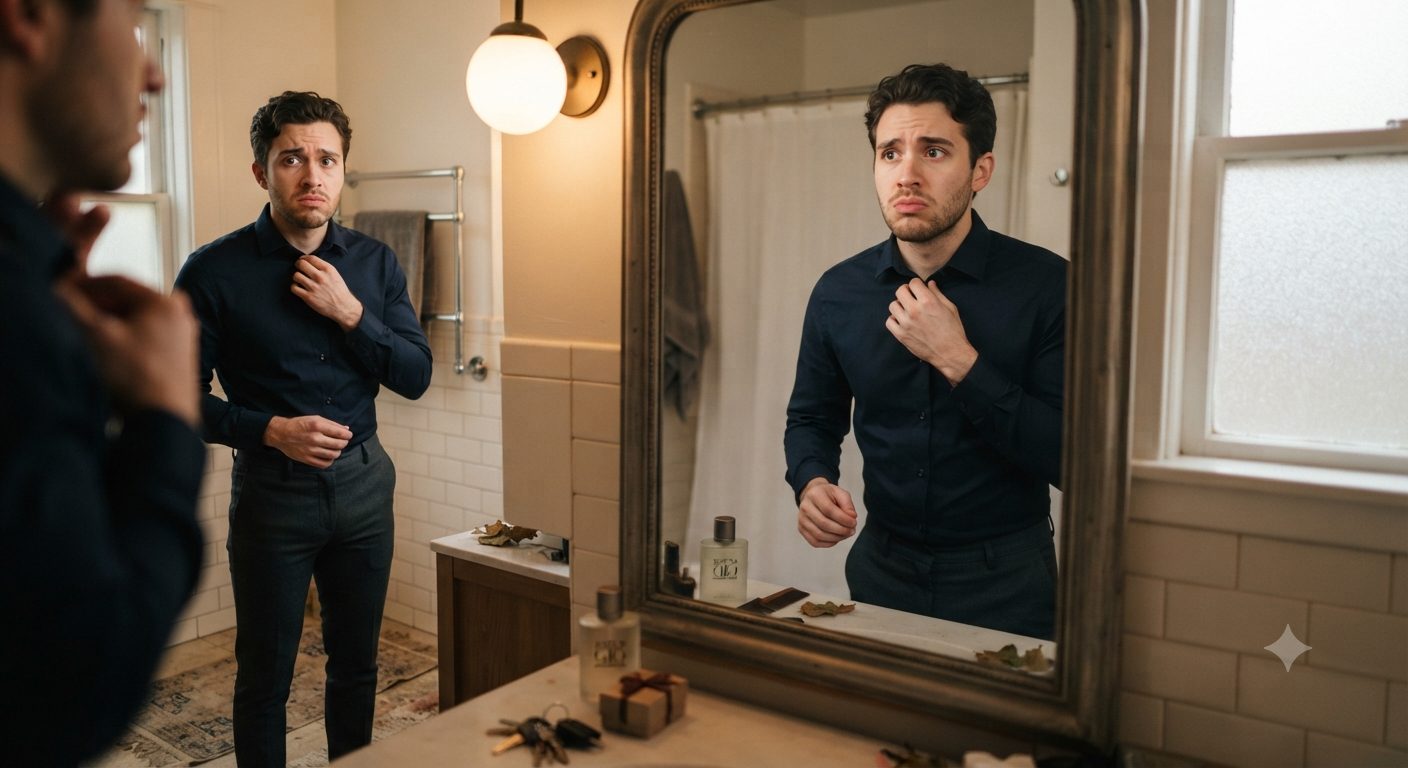
Dating is often described as exciting, fun, and romantic. But for many people, dating can bring up something very different: fear. The thought of meeting someone new, becoming vulnerable, being rejected, or allowing another person to get emotionally close can create an overwhelming response. Sometimes that response looks like nervousness. Other times, it looks like avoidance, overthinking, shutting down, or simply disappearing from the dating world altogether. Dating anxiety isn't always about being nervous before a first date. Sometimes it's the body's way of saying, "This feels unsafe." And that response can have roots much deeper than the person realizes.
For some people, intimacy has become associated with disappointment, rejection, betrayal, criticism, abandonment, or loss. Past relationships can leave emotional patterns behind, even when we consciously believe we've moved on. You may genuinely want a loving relationship while another part of you is quietly trying to protect you from getting hurt again. This can create an interesting conflict: your mind says, "I want connection," while your nervous system says, "Stay away."
This is one reason someone can repeatedly say they want a relationship but find themselves choosing emotionally unavailable partners, ending relationships when things become serious, constantly looking for flaws, or avoiding dating altogether. It isn't necessarily because they don't want love. Sometimes they want it so badly that the possibility of losing it feels frightening.
Fear can show up in surprisingly subtle ways. You might spend hours analyzing someone's text message. You might worry about whether they really like you. You might convince yourself they're going to lose interest. You might become hyper-focused on small imperfections. You might feel an intense need to know where the relationship is going before you've even had a chance to enjoy getting to know the person.
And sometimes, instead of moving toward connection, you pull away.
This doesn't mean you're broken. It means you've developed a protective pattern.
The brain is remarkably good at learning from experience. When something has caused emotional pain in the past, the mind can become very good at looking for signs that the same thing might happen again. Unfortunately, those protective patterns don't always know the difference between a genuine threat and the possibility of emotional discomfort.
That is where awareness becomes powerful.
Before we can change a pattern, we have to notice it.
Ask yourself: What happens inside me when someone begins getting close? Do I become excited, or do I immediately start looking for reasons it won't work? Do I feel comfortable expressing what I need? Do I expect rejection before I've actually experienced it? Do I find myself attracted to people who cannot fully show up for me?
These questions aren't meant to judge you. They're invitations to become curious about yourself.
Changing these patterns also doesn't mean forcing yourself into situations that feel overwhelming. Gentle change is often more effective than trying to push yourself through fear. Instead of demanding that you suddenly become comfortable with intimacy, you can begin by creating small experiences of safety, honesty, and connection.
Maybe that means allowing someone to know a little more about you. Maybe that means expressing a preference instead of automatically saying, "Whatever you want." Maybe that means staying present during a difficult conversation instead of immediately shutting down. Maybe that means noticing the urge to run away and simply taking a breath before deciding what to do.
These small moments matter.
They teach your mind and body that closeness doesn't always have to mean losing yourself.
Healthy intimacy isn't about becoming completely dependent on another person. It's about being able to remain connected to yourself while allowing another person to know you.
And that can take practice.
For some people, coaching, mindfulness, therapeutic work, or other supportive approaches can help uncover the beliefs and patterns underneath dating anxiety. Hypnosis and other mind-body approaches may also be useful for some people as part of a broader process of changing automatic responses and building a greater sense of confidence and safety.
The goal isn't to eliminate every uncomfortable feeling. Dating will always involve uncertainty. You can't completely protect yourself from rejection, disappointment, or heartbreak.
The goal is to become more comfortable with uncertainty without allowing fear to make every decision for you.
Because love requires a certain amount of vulnerability.
You don't have to stop being cautious. You don't have to ignore your boundaries. You don't have to force yourself to trust someone who hasn't earned it.
But you can learn to recognize the difference between a healthy boundary and a fear-based wall.
Sometimes the person standing between you and the relationship you want isn't another person.
Sometimes it's an old story you've been carrying about yourself.
"I'm not enough."
"I'm too much."
"Nobody will stay."
"I'll get hurt again."
"I'm better off alone."
Those stories may have once helped you survive something difficult. But you don't have to keep living by them forever.
Awakening begins when you become willing to question the stories that have been running your life.
And sometimes, the first step toward love isn't finding someone else.
It's learning to feel safe enough to let yourself be seen.
Reflections on sex, relationships, fear, and becoming more awake.
Reflections on sex, relationships, fear, and becoming more awake.
I don't think awakening means suddenly having all the answers. I don't think it means becoming a completely different person, either.
Maybe awakening is simply beginning to notice.
Noticing the patterns you've been repeating. Noticing the relationships that nourish you—and the ones that leave you feeling empty. Noticing the fears that have quietly been making decisions for you. Noticing what your body is trying to tell you. Noticing the parts of yourself you've been avoiding.
And sometimes, awakening begins with something as simple as asking yourself:
"Is this really what I want?"
As a holistic sexologist and coach, I often think about how much our sexuality can reveal about us.
Sex isn't just about physical intimacy. It can touch confidence, vulnerability, communication, trust, self-worth, body image, desire, aging, relationships, and the stories we've been carrying about ourselves for years.
Sometimes a person isn't struggling with sex itself.
They're struggling with feeling desirable.
Or safe.
Or confident.
Or connected.
Or worthy of being seen.
And sometimes the person who says, "I don't know what's wrong with me," isn't broken at all. They may simply have spent years disconnected from what they actually need.
Relationships have a remarkable way of showing us ourselves.
The person we're attracted to may bring out our deepest insecurities. The person we love may challenge our communication patterns. Dating can expose our fears of rejection, abandonment, inadequacy, or being alone.
And sometimes we find ourselves asking:
Why do I keep choosing the same kind of person?
Why am I afraid to be vulnerable?
Why do I want closeness but pull away when someone gets close?
Why am I staying when I know I'm unhappy?
These aren't necessarily questions that need quick answers.
Sometimes they're invitations to look deeper.
Dating later in life can feel very different from dating when we were younger.
We may have experienced divorce, heartbreak, betrayal, loss, or years of being in a relationship. We may have changed physically and emotionally. We may wonder whether someone will find us attractive—or whether we'll ever find the kind of connection we're looking for.
Fear can become incredibly convincing.
It can tell us:
"You're too old."
"Nobody will want you."
"You'll get hurt again."
"Just stay where you are. It's safer."
But safety and aliveness aren't always the same thing.
Sometimes the gentle work of awakening means learning to distinguish between a genuine boundary and a fear-based wall.
Our bodies change throughout our lives.
Hormones change. Desire can change. Sleep changes. Energy changes. Our bodies change. Stress affects us. Relationships affect us. Aging affects us.
Women may experience changes surrounding perimenopause and menopause that influence desire, comfort, mood, sleep, and intimacy.
Men can experience changes in testosterone, erectile function, desire, confidence, and energy.
None of these changes mean we're finished.
They mean we're human.
Our sexual selves don't disappear simply because we reach a certain age. Sometimes they simply need a different kind of attention.
One of the things I've come to believe is that feeling stuck isn't always a sign that something has gone wrong.
Sometimes being stuck is information.
It may be your mind saying, "Something needs to change."
Maybe you've outgrown a relationship.
Maybe you've outgrown an old version of yourself.
Maybe you've spent years taking care of everyone else and forgotten what you want.
Maybe you're afraid to make the next move because you don't know what comes after it.
You don't always have to know the entire path.
Sometimes you only need enough courage to take the next step.
I think we sometimes imagine transformation as something huge.
A major life change.
A new relationship.
A new career.
A completely different version of ourselves.
But awakening can be much quieter.
It can be saying no when you normally say yes.
It can be asking for what you actually want.
It can be allowing yourself to feel pleasure without guilt.
It can be looking in the mirror and being kinder to the person looking back.
It can be having the conversation you've been avoiding.
It can be admitting, "I'm not happy," and then asking, "What would make me feel more alive?"
For me, coaching isn't about telling someone who they should become.
It's about creating space for someone to discover who they already are beneath the fear, expectations, conditioning, and stories they've collected along the way.
Sometimes that discovery is uncomfortable.
Sometimes it's liberating.
And sometimes it's both.
Awakening isn't about becoming perfect.
It's about becoming more present.
More honest.
More connected.
More curious about yourself.
More willing to ask difficult questions.
And perhaps most importantly, more willing to believe that there is still more life, connection, pleasure, and possibility ahead of you.
You don't have to have everything figured out.
You don't have to become someone else.
You simply have to become a little more awake to the person you already are.
That is where the real work begins.
These ideas are a starting point. If something resonated, let's talk about what change could look like for you.
Book an Online Session